McDonald Fellowships Funding Opportunity for International Scholars
A Fully Funded Research Fellowship Is Sending Scientists From Developing Countries to World-Class Institutions — Here’s Who Qualifies
If you’re an early-career researcher in a low- or middle-income country working in or around multiple sclerosis, there’s a fellowship specifically designed for people in your position.
The McDonald Fellowships, funded by the Multiple Sclerosis International Federation (MSIF), cover research training at a leading institution outside your home country — including financial support for living expenses, research activities, and professional development.
But this isn’t a programme you can apply to casually. There’s a preparation step that most applicants either rush through or skip entirely, and it determines whether your application is even considered.

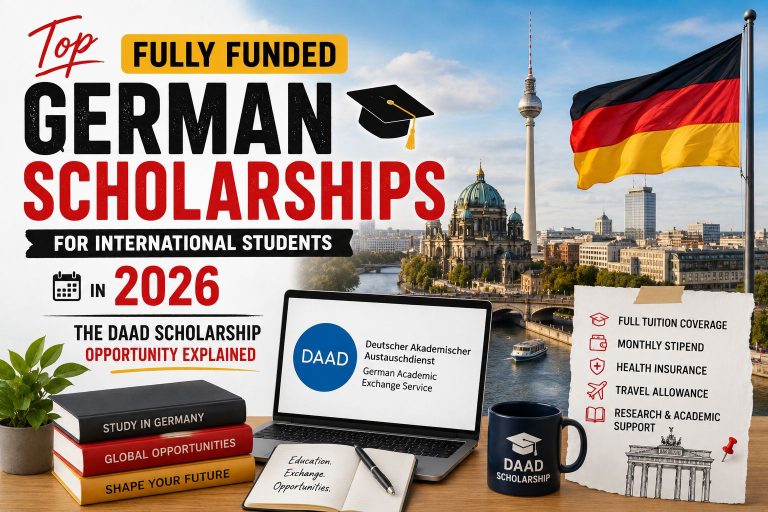
Top Fully Funded German Scholarships for International Students in 2026 – The DAAD Scholarship…
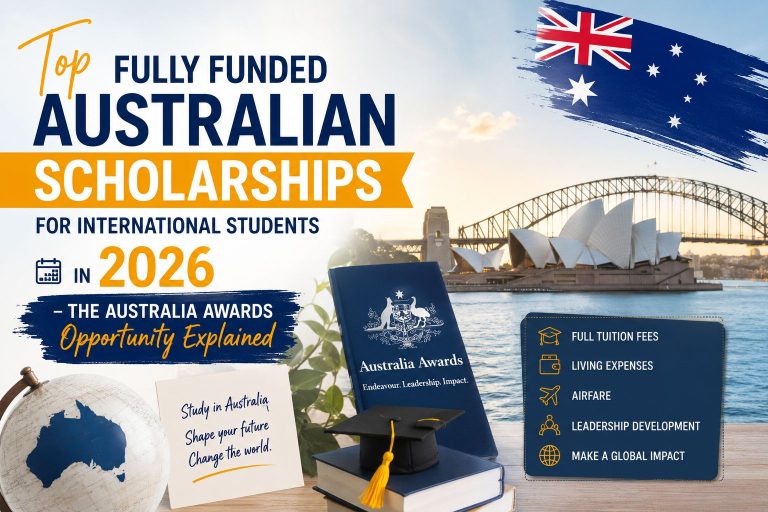
Top Fully Funded Australian Scholarships for International Students in 2026 – The Australia Awards…

Top Fully Funded Netherlands Scholarships for International Students in 2026 – The Holland Scholarship…

Top Fully Funded Swiss Government Scholarships for International Students in 2026 – The ETH…
Top Fully Funded New Zealand Scholarships for International Students in 2026 – The Manaaki…

Top Fully Funded Irish Scholarships for International Students in 2026 – The Government of…
We’ll get to that. First, let’s clarify what this fellowship actually offers and who it’s built for.
What the McDonald Fellowship Covers
Unlike many research grants that only fund project costs, the McDonald Fellowship is designed to fund you — your training, your living costs, and your development as a researcher.
Here’s what successful fellows receive:
| Support Area | What’s Included |
|---|---|
| Research & Training | Funding for your research activities at the host institution |
| Living Expenses | Financial assistance to cover your costs abroad |
| International Experience | Placement at a recognised research institution outside your home country |
| Professional Network | Access to collaborations with leading MS researchers globally |
| Skills Development | Advanced research training you bring back to your home institution |
The fellowship isn’t just about completing a project. It’s about building capabilities you can carry home — capabilities that strengthen research and healthcare systems in countries where MS research infrastructure is still developing.
That “bring it back home” element is central to the programme’s mission. And it’s also central to how they evaluate your application. More on that shortly.
Who This Fellowship Is Actually For
The McDonald Fellowship targets a very specific profile. If you match it, you’re in a smaller applicant pool than you’d think. If you don’t, no amount of application polish will help.
Here’s who qualifies:
You must be a citizen of a low- or middle-income country. This isn’t about where you currently work or study — it’s about citizenship. The fellowship exists to build research capacity in countries that need it most.
You must hold at least a postgraduate qualification relevant to the research area you’re proposing. This typically means a master’s degree or higher, though the specific requirement depends on your field and proposed project.
Your work must connect to multiple sclerosis research. This doesn’t mean you need to be a neurologist. Researchers in immunology, epidemiology, biostatistics, genetics, rehabilitation science, and related fields all fall within scope — as long as the proposed project has a clear connection to MS.
You must secure support from a host institution outside your home country. This is the step that separates serious applicants from everyone else. We’ll cover it in detail below.
You must demonstrate a commitment to returning home after the fellowship. MSIF isn’t funding brain drain. They’re funding knowledge transfer. Your application needs to show how the skills and experience you gain abroad will benefit your home country’s research or healthcare landscape.
That last point is where many strong applicants weaken their case. They focus entirely on what they’ll learn — and forget to explain what they’ll do with it when they go back.
The Step That Makes or Breaks Your Application
Here’s the part most applicants underestimate.
Before you can even submit your application, you need to identify a suitable host institution and research supervisor — and secure a letter of support from them confirming they’ll take you on.
This isn’t a formality. It’s a core eligibility requirement.
And it takes time. Finding the right institution, reaching out to a potential supervisor, discussing your research proposal, aligning on a project that serves both their lab’s interests and your development goals, and getting a formal letter of support — that process can take weeks or months.
Applicants who start this step after the application opens are already behind. The researchers who win McDonald Fellowships typically begin identifying and contacting potential supervisors long before the deadline.
Here’s what a strong approach looks like:
Research institutions and labs that work on MS-related topics in your area of interest. Read their recent publications. Identify supervisors whose work aligns with what you want to study. Send a concise, specific email introducing yourself, your background, and your proposed project — and explain why their lab is the right fit.
A generic email that says “I’m looking for a host institution for a fellowship” gets ignored. A specific email that references a supervisor’s recent paper and proposes a concrete research question gets a response.
The letter of support you ultimately receive isn’t just a checkbox. It signals to the review committee that a credible institution has already vetted you and sees value in your proposed work. That carries enormous weight.
What You Need to Submit
The application package is substantial. Here’s what’s typically required:
- Completed fellowship application form — available through the MSIF application portal
- Curriculum Vitae (CV) — include your publications, research experience, conference presentations, and any relevant professional activities. Keep it clean and current
- Research proposal — this is the centrepiece of your application. It should clearly define your research question, methodology, timeline, and expected outcomes. Crucially, it should also explain how the research connects to MS and how the skills gained will benefit your home country
- Academic certificates and transcripts — for your postgraduate qualification and any relevant prior degrees
- Letters of recommendation — from supervisors or colleagues who can speak to your research ability, character, and potential
- Letter of support from your proposed host institution — confirming they’ve agreed to host you and support your research during the fellowship period
The research proposal and the host institution letter are the two documents that carry the most weight. Everything else establishes your credentials. These two establish your vision and your readiness to execute it.
How to Apply — In the Right Order
The sequence matters more than most applicants realise. Here’s the correct way to approach it:
Step 1 — Start with the host institution. Before you write a single word of your application, identify where you want to train and who you want to work with. This shapes everything — your research proposal, your timeline, your budget, and the strength of your overall application.
Step 2 — Develop your research proposal in collaboration with your potential supervisor. A proposal that’s been refined through conversations with your host supervisor is always stronger than one written in isolation. It shows alignment, feasibility, and mutual investment.
Step 3 — Gather your supporting documents. Request recommendation letters early — give your referees at least three to four weeks. Ensure your CV is updated and your transcripts are ready.
Step 4 — Complete the online application. Fill in every section thoroughly. Don’t leave optional fields blank if you have relevant information to share.
Step 5 — Submit before the deadline. Not on the deadline. Before it. Late applications are typically not considered, and last-minute technical issues can cost you a year.
What the Review Committee Is Really Looking For
MSIF doesn’t publish a scoring rubric, but based on the programme’s stated goals, here’s what consistently matters:
Research quality and relevance — Is your proposed project scientifically sound? Does it address a meaningful question in MS research? Is the methodology appropriate?
Feasibility — Can this project realistically be completed within the fellowship period? Is the host institution equipped to support it? Has the supervisor confirmed their involvement?
Impact potential — This is the differentiator. Two applicants with equally strong proposals will be separated by how convincingly they answer one question: what happens when you go home? The committee wants to fund researchers who will use their training to build something — a lab, a programme, a clinical practice, a research network — in their home country.
Candidate profile — Your academic record, research experience, and professional trajectory all contribute. But they’re looking for potential, not just credentials. A younger researcher with a clear growth trajectory and a compelling plan can outperform a more experienced candidate with a vague one.
Common Questions, Answered
Is the McDonald Fellowship fully funded? Yes — the fellowship provides financial support for research activities and living expenses during the training period.
Can I choose any host institution? You can propose any recognised research institution outside your home country, but you must secure their agreement and a letter of support before applying.
Do I need to be a medical doctor? No. The fellowship is open to researchers from various scientific backgrounds, as long as the proposed research connects to multiple sclerosis.
Do I have to return to my home country afterward? The programme is designed around knowledge transfer. Applicants are expected to demonstrate a commitment to applying their training in their home country after the fellowship ends.
When is the application deadline? Deadlines vary by cycle. Check the MSIF website for the current timeline — and start preparing well in advance, since securing a host institution takes time.
Can I apply if I’m currently studying abroad? Eligibility is based on citizenship, not current location. If you’re a citizen of a low- or middle-income country, you may still qualify regardless of where you’re currently based. Confirm with MSIF for your specific situation.
The Researchers Who Win This Fellowship Start Months Early
The McDonald Fellowship isn’t won in the week before the deadline. It’s won in the months before the application even opens — when you’re reading papers, emailing potential supervisors, shaping your research question, and building the relationships that make your application credible.
By the time the portal opens, the strongest applicants already have their host institution confirmed, their proposal drafted, and their referees lined up. The application itself is just the final step.
If you’re reading this and the next cycle hasn’t opened yet, you’re in the best possible position. You have time to do this properly.
Use it.