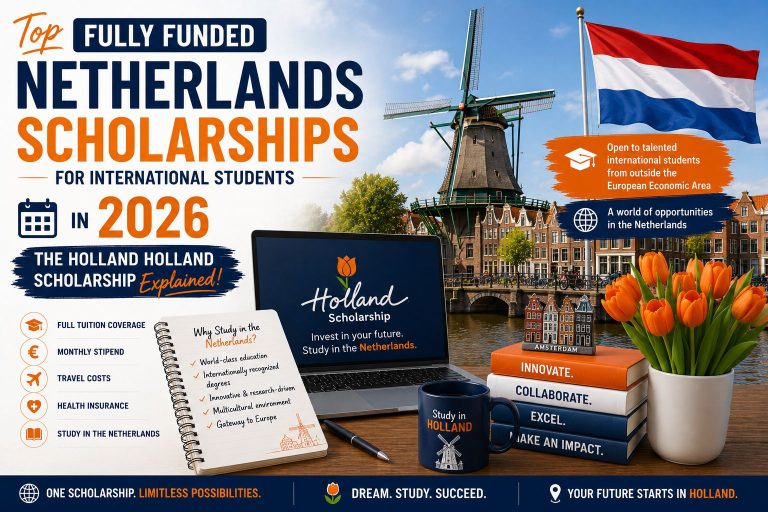
Top Fully Funded German Scholarships for International Students in 2026 – The DAAD Scholarship Opportunity Explained
Top Fully Funded German Scholarships for International Students in 2026 – The DAAD Scholarship Opportunity Explained
Germany has quietly become the smartest destination in the world for ambitious international students. Tuition at most public universities is free — yes, genuinely free — even for non-EU students in most federal states. Add to that a thriving job market, the most powerful economy in Europe, an 18-month post-graduation job-seeking visa, and a clear pathway to permanent residency, and it becomes obvious why students from Nigeria, India, Pakistan, Egypt, Brazil, Indonesia, and across the developing world are flooding into Germany at record numbers.
Top Fully Funded Australian Scholarships for International Students in 2026 – The Australia Awards…

Top Fully Funded Irish Scholarships for International Students in 2026 – The Government of…

Top Fully Funded Swiss Government Scholarships for International Students in 2026 – The ETH…

McDonald Fellowships Funding Opportunity for International Scholars
Top Fully Funded Netherlands Scholarships for International Students in 2026 – The Holland Scholarship…

Top Fully Funded New Zealand Scholarships for International Students in 2026 – The Manaaki…
But “free tuition” is not the same as “free degree.” Living in Munich, Berlin, Hamburg, or Frankfurt is expensive. The German student visa requires you to prove you have €11,904 per year in a blocked account (the Sperrkonto) before you can even enter the country. That is a serious barrier — but it’s also exactly the barrier that fully funded German scholarships are designed to remove.
In this guide, we’ll walk through the top fully funded German scholarships for international students in 2026, with a deep, practical breakdown of the country’s flagship program — the DAAD Scholarship — and we’ll show you exactly where to apply.
🎯 Quick Apply Link: The official DAAD scholarship portal is at funding-guide.de. All DAAD scholarship applications must be submitted online through this database. We’ll cover the full step-by-step process below.
What “Fully Funded” Really Means in Germany
Before we dive into specific programs, let’s get a definition out of the way — because Germany works a little differently from the U.S., U.K., or Australia.
Most German public universities already charge zero or token tuition fees for international students. That means a “fully funded” German scholarship is not just a tuition waiver (you barely need one). Instead, a true fully funded German scholarship covers:
- A monthly living stipend (typically €934–€1,300, depending on degree level)
- Travel allowance — usually a one-time flight allowance to and from Germany
- Health, accident, and liability insurance for the duration of the program
- A one-time study allowance for laptops, books, and academic materials
- Tuition fees in the small number of cases where they apply (some states like Baden-Württemberg charge non-EU students €1,500/semester)
- Rent and family supplements in many cases for scholarship holders with dependents
- German language course fees before the start of the academic program
Together, this package is worth roughly €20,000–€30,000 per year. The scholarships below are the genuine, life-changing ones — fully funded, prestigious, and open to international students for the 2026 academic cycle.
1. The DAAD Scholarship — The Gold Standard
If there is one German scholarship name that opens doors globally, it is DAAD.
The Deutscher Akademischer Austauschdienst (German Academic Exchange Service, DAAD) is the largest funding organization for international students in the world. Headquartered in Bonn with regional offices and information centres in more than 60 countries, DAAD has financed over 2 million scholars since its founding in 1925 — including the country’s flagship international student programs.
DAAD operates with an annual budget of roughly half a billion euros, and its acceptance rates run at approximately 10–15% depending on the program. That makes it one of the most prestigious — and most competitive — scholarship organizations on Earth.
What the DAAD Scholarship Covers
The DAAD package is genuinely comprehensive. Exact amounts vary by program, but the standard benefits include:
- A monthly stipend of €934 for master’s students and €1,300 for doctoral candidates (rates updated annually)
- Travel allowance unless covered by your home country or another funding source
- Health, accident, and personal liability insurance
- A one-time study allowance for academic supplies and equipment
- Tuition fees for state universities that charge them (e.g., Baden-Württemberg)
- Rent subsidy and family support for scholarship holders with spouses or children
- German language course funding before the start of the academic program (typically a 2–6 month intensive course)
For undergraduates funded under specific DAAD programs, the monthly stipend is around €861. For doctoral candidates in research grants, it can rise to €1,200–€1,300 per month.
Crucially, DAAD funding covers the entire duration of your degree — typically 18–24 months for a master’s and up to 4 years for a PhD. DAAD scholarships do not have to be paid back.
Who Can Apply
DAAD runs dozens of different scholarship programs, each with its own eligibility. The most relevant for international students are:
- DAAD Study Scholarships — for master’s students in any academic field
- DAAD EPOS (Development-Related Postgraduate Courses) — for master’s students from developing countries, requiring at least 2 years of professional experience
- DAAD Research Grants — for doctoral and postdoctoral candidates
- Helmut Schmidt Programme — for public policy and governance students from developing countries
Common baseline requirements across most DAAD programs:
- A strong academic record (typically a “Bachelor’s degree with good grades” or higher)
- A completed bachelor’s or master’s degree no more than 6 years before the application date
- Language proficiency: English (IELTS / TOEFL) or German (TestDaF / DSH), depending on your program’s language of instruction
- A clear statement of motivation explaining why Germany, why this program, and how you’ll apply your knowledge
- 2 years of professional experience for EPOS and other development-focused programs
- Strong letters of recommendation (typically two, often from professors holding doctoral degrees)
- A clear plan to return to your home country after completing the program (for development-focused tracks like EPOS)
Eligible Fields of Study
DAAD funds applicants across all academic disciplines through its broad Study Scholarships. The EPOS list, which is the most popular track for international students from developing countries, focuses specifically on master’s programs in:
- Economics, business, and public administration
- Engineering, energy, and infrastructure
- Regional and urban planning
- Agriculture, food security, and rural development
- Public health and epidemiology
- Natural and environmental sciences
- Social sciences, education, and law
- Media studies and communication
DAAD’s STEM-focused tracks (Study Scholarships for STEM Disciplines) have separate eligibility and selection windows. Clinical medicine is generally not eligible, but public health and biomedical research are.
The 2026/2027 Application Timeline
The DAAD timeline varies significantly by program, but the general pattern looks like this:
- DAAD EPOS: Applications typically open in June and close in August–October of the year before the funding starts (different participating programs have their own deadlines — always check the specific course)
- DAAD Study Scholarships (general): Deadlines typically fall in October–November for funding starting the following academic year
- DAAD Research Grants (doctoral): Deadlines in October or April–May depending on the call
- Selection results: Typically announced February–April of the year funding begins
- Funding starts: October (Winter Semester) of the funded year
The key insight: if you want DAAD funding to start in October 2027, you should be submitting your application between June and October 2026.
👉 Where to Apply — Official DAAD Links
Here are the official, verified application URLs. Bookmark this section.
| Resource | Official Link |
|---|---|
| 🌐 DAAD scholarship database (the master portal — start here) | funding-guide.de |
| 🏛️ DAAD main website (English) | daad.de/en |
| 📋 DAAD scholarship overview & info for applicants | daad.de/en/studying-in-germany/scholarships/daad-scholarships |
| 🖥️ My DAAD personal application portal | meindaad.de/en |
| 🌍 Find your local DAAD regional office | daad.de/en/the-daad/contact |
⚠️ Important: The DAAD application is 100% free. Any agent, “education consultant,” or website asking you to pay a “processing fee” to apply for DAAD is a scam. Use only the official links above.
How to Apply — Step by Step
- Browse the DAAD scholarship database at funding-guide.de. Filter by status (graduate, doctoral, post-doc), country of residence, and field of study to find the specific program that fits you.
- Read the Call for Applications carefully. Each program has its own deadlines, eligibility rules, and application requirements. Read the entire call — not just the summary.
- Apply for university admission separately. For most DAAD master’s programs, you must first secure admission (or at minimum, submit a strong application) to one of the participating German universities offering your chosen program.
- Prepare your application documents. Standard requirements include:
- A 1–3 page letter of motivation explaining your academic and personal reasons for studying in Germany
- A current CV in tabular form (Europass format preferred)
- Certified copies of academic transcripts and degree certificates
- Two letters of recommendation (from professors with doctoral degrees, where possible)
- English language certificate (IELTS 6.5+ or TOEFL 90+) or German certificate (TestDaF / DSH / Goethe C1)
- For EPOS: proof of at least 2 years of relevant work experience
- A clear research proposal (for doctoral applicants)
- Submit through the DAAD Portal. Register at meindaad.de, complete the online form, upload PDFs of all documents, and submit before the deadline.
- Wait for selection. Applications are reviewed by independent, voluntary selection committees that assess academic quality, project relevance, and applicant potential.
- Interview (where applicable). Some programs invite shortlisted candidates to interviews at local DAAD offices.
A critical warning: document formatting matters. DAAD applications must be uploaded as PDFs in English or German (depending on the program). Documents in other languages need certified translations. Sloppy formatting, scans that aren’t readable, or missing pages get applications rejected at the first review stage.
2. The Heinrich Böll Foundation Scholarships
Affiliated with Germany’s Green Party but academically independent, the Heinrich Böll Foundation is one of the country’s six major political foundations — and one of the most generous to international students. Named after Nobel laureate Heinrich Böll, the foundation supports approximately 1,500 students per year, including roughly 150 international scholars.
Coverage: Monthly stipend of €934 (master’s) or €1,350 (doctoral), plus health insurance, family supplements, mobility allowances, and access to a structured political and civic engagement program.
Eligibility: Open to international students of all nationalities pursuing master’s or PhD programs at German universities. Applicants must demonstrate strong academic performance and a clear commitment to democracy, environmental sustainability, social justice, or human rights.
👉 Apply here: boell.de/en/foundation/scholarships
3. The Konrad-Adenauer-Stiftung (KAS) Scholarship
Affiliated with the Christian Democratic Union (CDU), the Konrad-Adenauer-Stiftung is another of Germany’s six major political foundations. KAS offers scholarships to international students with a strong commitment to democracy, the rule of law, and social market economy values.
Coverage: Monthly stipend of approximately €992 for master’s students for up to 2 years; €1,350 for doctoral students for up to 3 years. Plus health insurance, study allowance, and access to KAS’s seminar and networking programs.
Eligibility: International students with strong grades, demonstrated leadership, civic engagement, and (importantly) German language proficiency at B2 level or higher. KAS expects scholars to participate actively in foundation events.
👉 Apply here: kas.de/en/web/begabtenfoerderung-und-kultur
4. The Erasmus Mundus Joint Masters Programmes
For students who want to study in multiple European countries during a single master’s degree, the Erasmus Mundus Joint Masters (EMJM) programs are unbeatable. These are EU-funded master’s programs delivered jointly by consortiums of European universities — and many of the most prestigious are coordinated by German universities or include a major German component.
Coverage: Full tuition fees, a monthly stipend of approximately €1,400, travel and installation allowance, and full health insurance for the entire 1–2 year program.
Eligibility: Open to students of all nationalities holding a bachelor’s degree. You apply directly to the consortium running the specific Erasmus Mundus program you’re interested in — not to the EU centrally.
👉 Apply here: erasmus-plus.ec.europa.eu/opportunities/individuals/students/erasmus-mundus-joint-masters
5. The Deutschlandstipendium (National Scholarship)
The Deutschlandstipendium is Germany’s national merit-based scholarship — a unique public-private partnership where half the funding comes from the federal government and half from private sponsors (companies, foundations, individuals).
Coverage: €300 per month for at least 2 semesters (renewable for the full standard duration of your degree). It’s not “fully funded” on its own, but it stacks well with other awards and is income-independent.
Eligibility: Open to students of any nationality already enrolled (or admitted) at a participating German university, at undergraduate or master’s level. Awarded on the basis of academic excellence and demonstrated social engagement.
👉 Apply here: deutschlandstipendium.de (then apply directly through your individual university)
6. The Friedrich Ebert Foundation (FES) Scholarship
Affiliated with the Social Democratic Party (SPD), the Friedrich Ebert Foundation is Germany’s oldest political foundation and a major funder of international students committed to social democracy and trade union values.
Coverage: Approximately €934/month for master’s students and €1,350/month for doctoral candidates, plus health insurance, study allowance, and family supplements.
Eligibility: International students committed to democratic socialism, social justice, and active civil society engagement. German language proficiency at B2 level is generally required.
👉 Apply here: fes.de/en/studienfoerderung
How to Maximize Your Chances of Winning a Fully Funded German Scholarship
Across all these programs, the same patterns separate winners from rejected applicants. If you internalize these, your odds improve dramatically.
Start 12–18 months early. German scholarships, especially DAAD, are heavily document-driven. Translations, recommendation letters, transcripts, and language test results all take weeks to assemble. Begin in the academic year before you plan to start studying.
Master the motivation letter. This is the single most important document. A great DAAD motivation letter answers four questions clearly and specifically: Why this exact program at this exact university? Why Germany over other countries? How does this fit into your career trajectory? What measurable impact will you have on your home country or field?
Tailor every application. Germany’s political foundations all have values orientations. Heinrich Böll wants environmental and social-justice candidates. KAS wants Christian-democratic, market-economy candidates. Friedrich Ebert wants social-democratic candidates. Submitting the same essay to all of them is a guaranteed rejection.
Learn some German — even if your program is in English. Many programs (especially political foundation scholarships) require B2 German. But even for English-taught DAAD programs, demonstrating that you’re learning German shows commitment to integrating into German society. A1–B1 certificates from Goethe-Institut go a long way.
Quantify your impact. “Led a student organization” is forgettable. “Founded and led a student NGO that delivered free tutoring to 380 underprivileged children across 5 schools over 2 years, raising standardized test scores by an average of 22%” is unforgettable.
Choose recommenders strategically. A detailed, personal letter from a junior professor who has supervised your honors thesis beats a generic letter from a famous professor who barely remembers your name. For DAAD, recommendations from professors with doctoral degrees carry the most weight.
Polish ruthlessly. Have your motivation letter reviewed by at least three people — ideally including a past DAAD scholar, a writing tutor, and a faculty mentor in your field. Typos and vague claims signal carelessness to reviewers.
Frequently Asked Questions (FAQ)
Is the DAAD scholarship really fully funded?
Yes. DAAD covers monthly living costs (€934–€1,300+), travel, health insurance, study allowance, and where applicable, tuition fees. It also funds a German language course before the program starts. You will not need to take loans to study under DAAD funding.
Do I need German language skills to apply for DAAD?
It depends on the program. If your master’s program is taught in English, you need an English certificate (IELTS 6.5+ / TOEFL 90+) — German is not required for the application, though you’ll likely be enrolled in a free German course during your studies. If your program is in German, you’ll need DSH, TestDaF, or Goethe C1.
Can I work part-time on a DAAD scholarship?
Yes — international students in Germany can legally work 120 full days or 240 half-days per year, and DAAD does not prohibit this. However, the stipend is generally sufficient that scholars don’t need to work, and your studies should remain your priority.
Do I have to return to my home country after DAAD?
For most general DAAD programs, no — Germany’s 18-month post-graduation job-seeking visa applies to DAAD scholarship holders, so you can stay and find work. However, DAAD EPOS and several development-focused tracks require you to return home for at least 2 years to apply your skills locally. Read your specific program’s terms carefully.
Can I apply for multiple German scholarships at once?
Yes — and you should. Apply for DAAD, one or two political foundations whose values align with yours, and any university-specific awards in parallel. You can only hold one major scholarship at a time, but multiple offers give you leverage and safety.
Are there age limits?
DAAD does not impose a strict age cap, but most master’s programs expect you to have completed your bachelor’s degree within the last 6 years. For doctoral programs, the limit is typically within 6 years of completing your master’s.
What is the acceptance rate for DAAD?
Roughly 10–15% of applicants are awarded a DAAD scholarship in most cycles. That sounds low, but applications with strong motivation letters, clear development relevance, and well-aligned program choices significantly outperform the average.
Can I bring my family with me?
Yes. DAAD provides a family supplement if you bring your spouse and children to Germany. The exact amount depends on family composition and is paid in addition to your base stipend.
Your Next Steps — Start Today
A fully funded German scholarship can transform your career, leave you debt-free, and open doors to Europe’s largest economy. DAAD alumni include Nobel laureates, presidents, central bank governors, and CEOs across more than 100 countries — a network built over a century of consistent investment in international talent.
The competition is fierce. But here’s the truth: the people who win these scholarships are not necessarily smarter than you. They simply started earlier, prepared more carefully, and actually submitted on time.
🚀 Take Action Right Now (5 Minutes)
Don’t close this tab and forget about it. Do these three things in the next five minutes — your future self will thank you.
- ✅ Search the DAAD funding database: Visit funding-guide.de and filter scholarships by your status (graduate, doctoral, etc.), your country of residence, and your field of study. Find the 2–3 programs that fit you best, then bookmark each one.
- ✅ Find your local DAAD office: Visit daad.de/en/the-daad/contact and locate the DAAD regional office or information centre closest to you. They offer free advice and information sessions for prospective applicants in 60+ countries.
- ✅ Create your My DAAD account: Go to meindaad.de/en and register. Even if you’re not ready to submit yet, getting an account lets you save progress on your application and return any time. Most successful applicants start their account 6+ months before submission.
📚 Keep Reading — Related Guides on This Blog
- How to Write a Winning DAAD Motivation Letter (with examples)
- IELTS vs TestDaF for German Universities: Which Test Should You Take?
- The Complete Guide to the German Student Visa and Sperrkonto (Blocked Account)
- Top 15 Free Tuition Universities in Germany for International Students
- How to Email a Potential PhD Supervisor in Germany (with a template)
- DAAD vs Fulbright vs Vanier vs Australia Awards: Which Major Scholarship Is Right for You?
- Post-Study Work Visa in Germany: The Complete Guide for International Graduates
- The Cheapest Cities to Study in Germany for International Students 2026
Bookmark this guide, share it with a friend who deserves a shot at studying in Germany, and start your application today. Your seat at a top German university could be 12 months away — but only if you apply.
Disclaimer: Scholarship eligibility, benefits, and deadlines change each year and vary by program. The information in this guide was accurate at the time of publication, but you must always verify current details on the official DAAD or foundation website before applying. This article is for informational purposes only and is not an official DAAD, Heinrich Böll Foundation, or German Government communication.